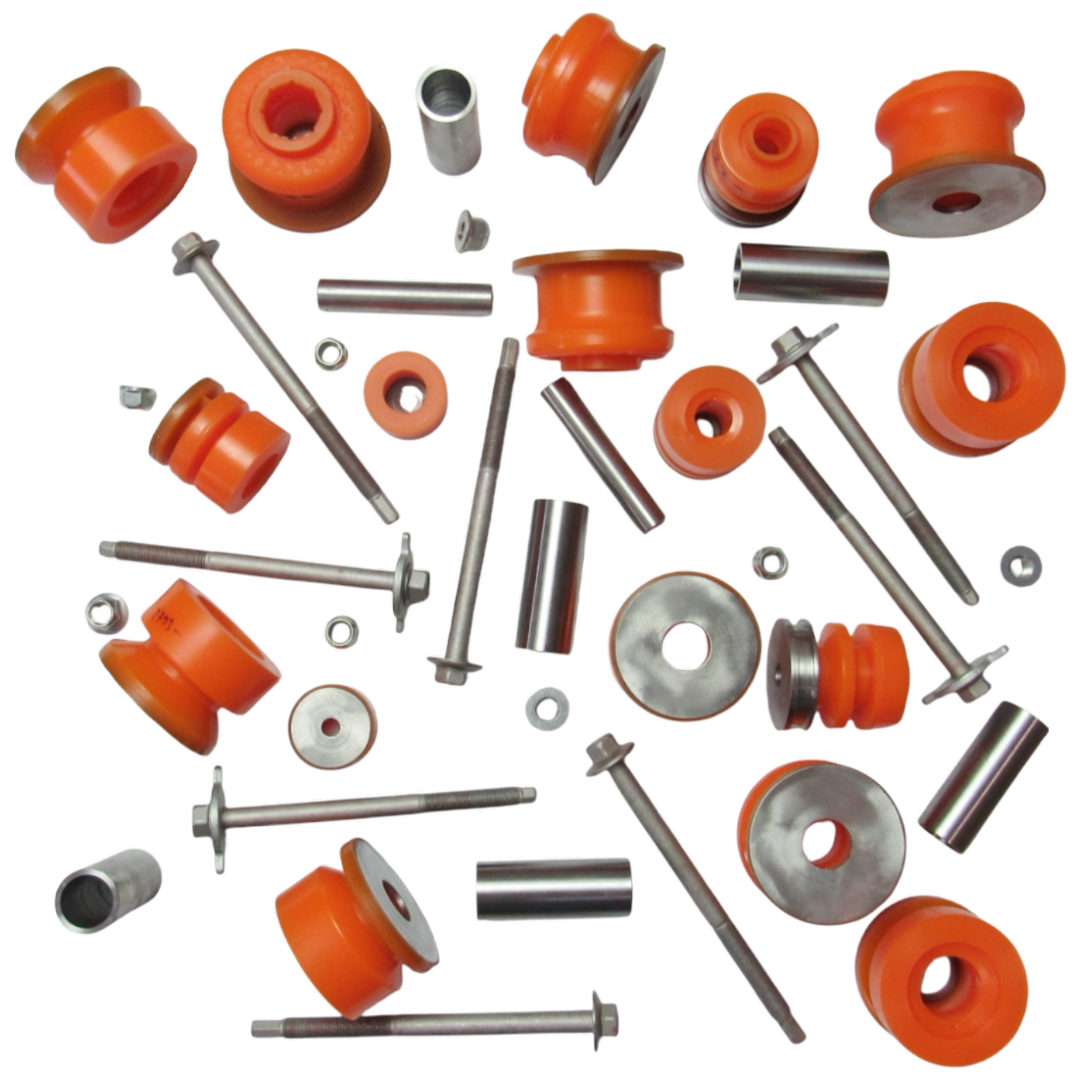
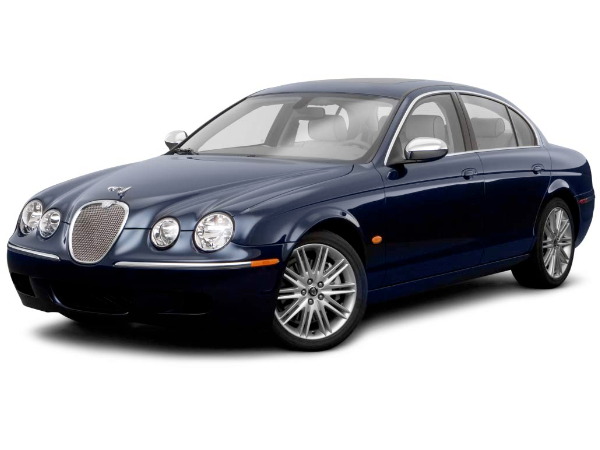
Jaguar S-Type 1999–2008 – Rare Rear Subframe Silent Blocks
Jaguar S-Type 1999–2008 – Rare Rear Subframe Silent Blocks
Rear subframe silent blocks of the Jaguar S-Type 1999–2008 are one of the most common causes of knocking and rear-end instability as the vehicle ages. Owners of the British sedan usually look for shock absorbers or control arms, although the real source of the problem is hidden in the subframe mounting to the body. These elements are responsible for noise isolation and correct suspension geometry, and their wear dramatically changes the vehicle’s behavior.
The model was designed as a comfortable business sedan with a soft suspension, so engineers deliberately used elastic dampers. Over the years, the rubber loses elasticity, and the car that once stood out for its smooth ride begins to behave like a worn chassis even with serviceable shock absorbers.
Rear Subframe Silent Blocks: Their Role
The rear subframe is a structural part of the chassis where the control arms, differential, and stabilizer are mounted. It is not rigidly welded to the body but installed through damping bushings. Thanks to this, the body does not receive direct road impacts, and the wheels remain in the correct position under load.
While driving, the subframe constantly changes its position by fractions of a millimeter. This micro‑movement provides comfort but also leads to wear. In the S‑Type model, engineers focused on ride smoothness, so the rubber elements have a soft structure. After many years of operation, they sag, play appears, and the subframe begins to shift. The driver feels this as rear steer effect, delayed response, and instability at speed. Wheel alignment also suffers: settings done on the alignment stand quickly go out of spec even though the adjustment bolts remain tight.
Rear Subframe Silent Blocks Front and Rear
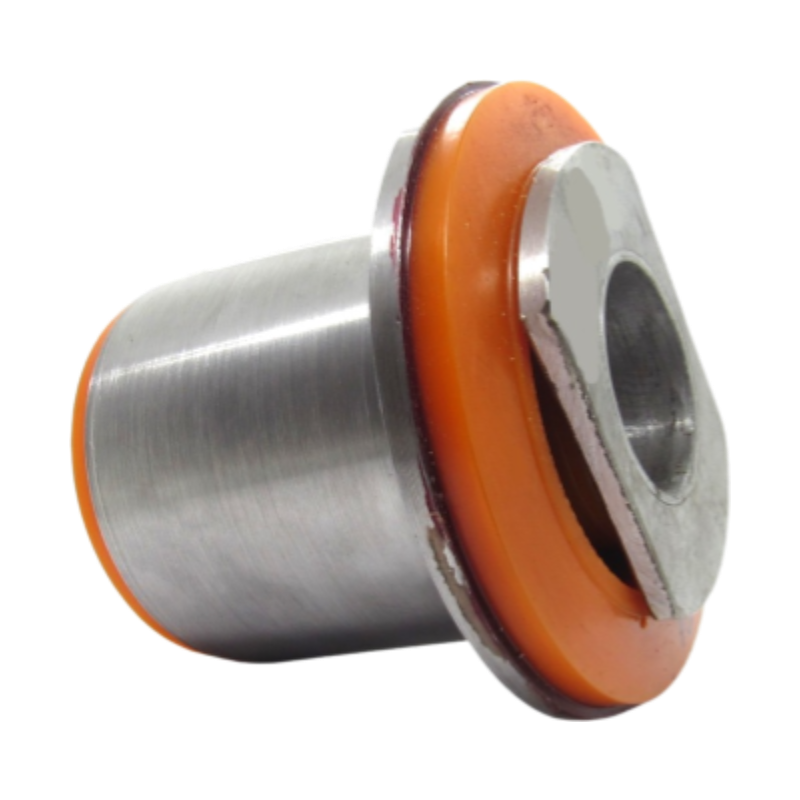
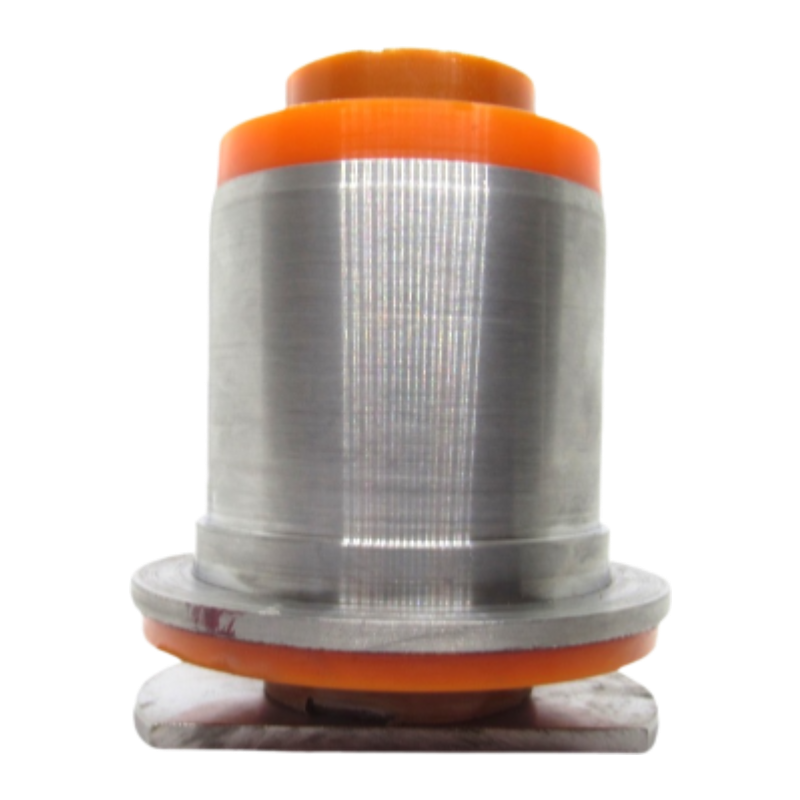
The front bushings operate under constant longitudinal load. During acceleration, the differential pulls the subframe backward; during braking — forward. That is why they fail first. When the rubber tears, a characteristic knock appears during launch and gear changes, which is often mistaken for a transmission problem. Many owners replace differential mounts or the driveshaft, but the issue returns. The reason is that the subframe mounting no longer holds geometry, and the drivetrain operates at an angle. Timely replacement of the front element eliminates jerks, restores smooth driving, and reduces load on the axle shafts. Besides comfort, this also affects safety — during hard braking the vehicle stops “nodding” with the rear.
The rear bushings are responsible for lateral stability. They damp oscillations in corners and maintain wheel alignment. When they wear out, the vehicle begins to “float” on the road, and steering correction becomes a constant necessity even on smooth asphalt. This is especially noticeable on the highway: the car must be constantly caught, body vibration appears, and tire wear becomes uneven. In advanced cases, the subframe shifts so much that the load on the control arms and joints increases, and the rear suspension begins to operate with foreign noises.
Why Polyurethane Solves the Problem of Rare Parts?
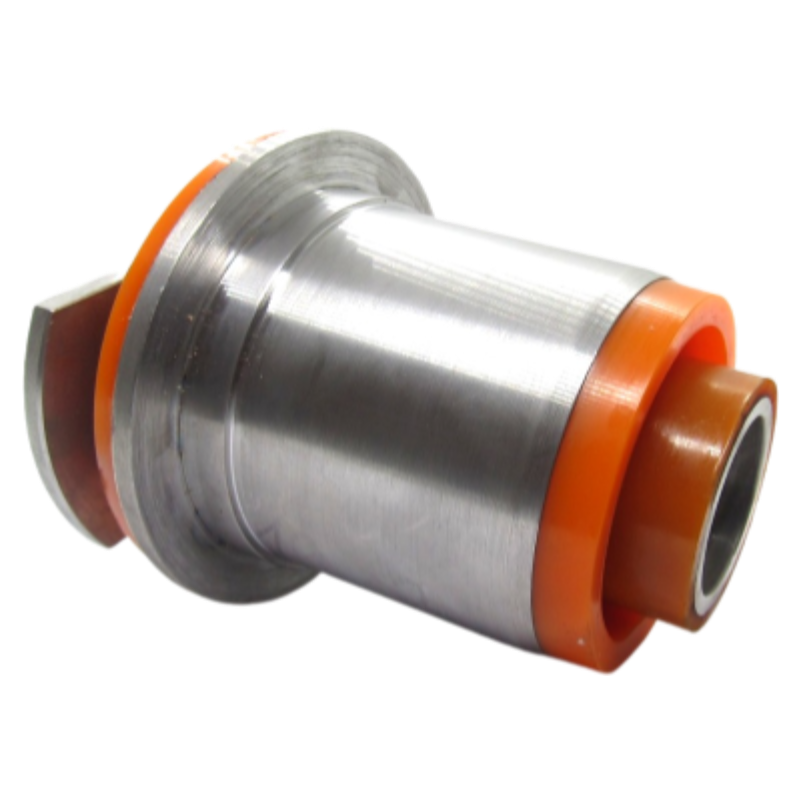
Original rubber bushings have almost disappeared from the market, and aftermarket analogs have a short lifespan. A modern alternative is hot‑cast polyurethane namely pp1902 pp1901 , which is not afraid of temperature changes and maintains its shape under load. The material works reliably for many years and does not delaminate even with daily use.
Main advantages of polyurethane elements:
- stable suspension geometry;
- no sagging over time;
- resistance to oils and road chemicals;
- more precise steering response;
- extended service life of adjacent components.
After installation, the vehicle stops changing trajectory during acceleration, the shift knock disappears, and the feeling of body integrity returns. The suspension works tighter, but comfort does not disappear — on the contrary, parasitic vibrations and cabin noise are reduced.
Why Choose PolyPro?
PolyPro specializes in polyurethane suspension components for more than 10 years. Production is focused on real road conditions, not only laboratory tests. Each part is checked for material density and fit accuracy so installation does not require modifications.
Customers choose us because of the combination of service and quality: fast nationwide shipping; professional consultation before purchase; selection for a specific modification; stable stock availability; product warranty.
As a result, the owner gets predictable vehicle behavior, savings on repairs, and confidence in suspension durability for years ahead. The vehicle retains comfort, and maintenance costs are reduced thanks to the longevity of the material.